
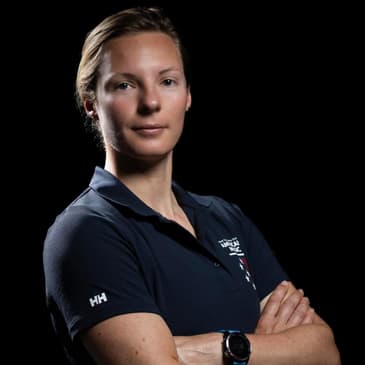
The America's Cup has always been about pushing yacht design to the limit and embracing changes to keep the sport relevant for future sailors. But over the past 153 years, the teams have been predominantly filled with male crews with opportunities few and far between for female sailors to compete. In a move to change that, the organizers of the 37th America's Cup have opened the door to the world's best female sailors with the inaugural Puig Woman's America's Cup, a regatta to be sailed in the run up to New Zealand's defense later on this fall in Barcelona. Late last year, our guest Sara Stone, was announced as a member of the first NYYC American Magic Woman's team but there has been little time to celebrate because Sara has been keeping busy as a new member the US SailGP team and crewing with the Quantum Racing Team in the highly competitive TP52 Series. We catch up with Sara to talk about her sailing career, what it means to sail into the history books and what's next.
[00:00:00] Welcome back to Around the Buoy, broadcasting from the East Passage Barright Studios. I'm Carter
[00:00:27] Richardson and I'm here with Tyler Fields of Tyler Fields' photography. Tyler, how's it going?
[00:00:33] I think we're in that first, possibly second fall spring.
[00:00:43] It was 55 degrees and so gorgeous today. It was gorgeous. And I think the temperatures
[00:00:49] supposed to be about the same if not a little bit warmer than the next couple days.
[00:00:53] It could be it. Well, the Groundhog says and we all know that that stupid little road and
[00:00:58] folk and we've got there was two weeks and that was an early February so now we should be
[00:01:04] well into spring now. I do this every year. Get to about this time and winter starts really bugging me.
[00:01:11] Part of it is we've not had like a major, we haven't had a blizzard, we haven't had a major snowstorm.
[00:01:16] It's been fairly mild. It's definitely been mild. So there hasn't really been anything to break
[00:01:22] it up. It's just it's just Groundhog Day every day. Yeah. And so now that we're I mean,
[00:01:28] we're almost in the March. It'll be Marching a couple days. Yep. I mean spring is right around the
[00:01:33] corner. So I guess it really is. I guess 50s are okay. I've been getting emails and phone calls
[00:01:39] from boat owners. So yes, spring is right around the corner. They're all saying hey don't worry
[00:01:45] about this year. I'm fine. I don't know if I'm voting the water. I'm not in a rush this year.
[00:01:49] Yeah. That's good. It's neither am I. So August is a good time to go in forget that fourth of July rush.
[00:01:56] Yeah, really, really. I think right as we're getting into hurricane season,
[00:02:00] that's when I want to go in. I appreciate those cars. Well, I got a push notification from Hurricane
[00:02:05] tracker. And if you live if you live anywhere at this point, you need to have the hurricane
[00:02:10] tracker app. I'm not paid or we're not sponsored, but it is a really useful tool. It is. And they did
[00:02:18] a push notification yesterday. So that was February 26th, that hey, just check and make sure everyone
[00:02:28] is on track. Make sure you're working. The oceans are already fairly warm. So just heads up kind
[00:02:37] of a thing. So it's not too far away for that either. Not too far away. Not too far away. Well,
[00:02:44] we do have a pretty cool episode for you to stay. I got a couple of news topics to talk about
[00:02:50] before we get into our guest. The first one is and I will credit my co-host, the
[00:02:58] the amazing Tyler Fields with this title, but it's stingray Jesus and more povich.
[00:03:03] Well, I would like to take credit for that, but I think that was a what was it?
[00:03:07] CNET or Gaucker or I think wired wired wired wired on or whatever great story about a stingray
[00:03:18] Jesus. So we'll say in a macular conception in North Carolina, I feel that we should before we
[00:03:24] get into that, we should say that were idiots and that there's a lot of big words and a lot
[00:03:30] of big words. Lofty theory into this. So listen, enjoy but maybe do your own research on what
[00:03:39] actually happened because I think I'm gonna probably make some mistakes here.
[00:03:45] And then the second one is a fascinating topic. It's so incredible. This is a worldwide mystery
[00:03:51] that's been around since the 30s and we might have solved it and I stress might, but a real estate
[00:04:00] developer also in North Carolina has found or says he has found Amelia Earhart's plane,
[00:04:07] solving one of the biggest world's mysteries in let's see 70, 80, 90 nearly a hundred years.
[00:04:14] It's pretty incredible. The images they look intriguing. There's there's an image I'm not to well
[00:04:20] we'll get into it after it will get into that after but before we get into all those news topics,
[00:04:26] we will get into our guest. One thing that we hear all throughout the working world is you can't
[00:04:34] get a job without experience and you can't get an experience without a job. And this has been
[00:04:40] really true. One of the things Ben said, especially for a lot of the female sailors in the world
[00:04:46] and trying to get into top tier racing is that they can't get on boats because they don't have
[00:04:52] any experience. Well, that is all changing. The America's Cup has developed a new two new classes
[00:04:58] of four of the cup or two new races that is going to go along with the America's Cup this fall
[00:05:04] and that is the Pueg Women's America's Cup and also a youth America's Cup. We're really excited
[00:05:10] about that because again, I'm a huge baseball dork. I'm a huge baseball geek and their baseball
[00:05:17] is dying because they're not trying to get new people to watch it. And this is one way the America's
[00:05:22] Cup is saying we need to get this out to a much larger crowd, much more diverse crowd and we are
[00:05:28] excited because we are going to be talking to a member of the New York Yacht Club's American
[00:05:33] Magic's Women's Team. Her name is Sarah Stone and she's got a great story about how she came into
[00:05:39] sailing and also just the experience of sailing over the last 10 years and we will bring her on after
[00:05:45] this short break.
[00:05:47] The America's Cup has always been about pushing the sport of sailing to the limit and the last 10 years
[00:06:17] have been proof of that of holes of raised out of the water with speeds nearing 50 knots. But
[00:06:21] many aspect of the racing has not changed and outside of a few exceptions, the sport has been
[00:06:26] heavily male dominated. That is until later on this year when the world's best female sailors race
[00:06:32] in the inaugural Pueg Women's America's Cup in Barcelona. Last December, our guest Sarah Stone
[00:06:37] was announced as a member of the New York Yacht Club's groundbreaking team and we're excited to
[00:06:41] have her on to talk about this and the effect that they were God will have on the sailing world.
[00:06:46] Sarah, welcome to Around the Boolean. Thanks for coming on the show.
[00:06:49] Thank you guys very much for having me. Good good. Hey, so you grew up in Mary, Massachusetts,
[00:06:55] a location known for its sailing but you started your quote unquote athletic career as a row or not
[00:07:00] a sailor. How did this come about? Were you just a sailor who was burnt out and looking for something
[00:07:05] different? Not quite. I showed up at high school and I was really tall and like a gangly teenager
[00:07:14] and the rowing coach sort of said, hey you should try rowing. You're pretty tall. You'd be a good
[00:07:19] fit for it and a little bit of logic where they said, hey you can row in the spring of your freshman year
[00:07:26] if you love it great. You can row the rest of your high school career and you can still sail every
[00:07:30] summer and if you don't like it, you can still sail every summer and then next year you can sail
[00:07:35] so that made pretty good sense. Well, that must have been tough especially for the sailing coach because
[00:07:41] the school you went to, Tabour Academy has a very good sailing program. How did that? What was that
[00:07:48] talk like? Yeah, so actually I wasn't that into sailing as a little kid. I mean, I did summer
[00:07:55] sailing and sort of did a little bit of opty stuff. I didn't love it. I did a little bit of 420
[00:08:00] stuff more cruising with my family around Buzzards Bay, coastal New England, that kind of a thing.
[00:08:07] So I loved the bigger boat piece but I wasn't so stoked on racing that at that point. I thought,
[00:08:13] sure let's give rowing a try. It doesn't matter to me see if I like it. Are you aware now looking
[00:08:20] back on your whole cut where you are now about the effect or how many rowers have been recruited
[00:08:27] to do America's Cup sailing? Yes, now I'm aware of it. I certainly wasn't at the time.
[00:08:35] It's definitely I credit a lot of my development as an athlete and as a person honestly to rowing.
[00:08:41] I think it teaches you a huge amount of discipline, a huge amount of work ethic.
[00:08:45] It's an incredible team sport and I mean, my life would be completely different if I hadn't tried
[00:08:51] rowing in high school. I will totally geek out now and just have you read the book The Assault
[00:08:57] Unleak, The Assault Unleak Cassitas by Brad Lewis? No, I have not. Oh, it's great. It's so I was
[00:09:04] just telling Tyler about this just off air. The Brad Lewis was a rower and he won the gold medal
[00:09:10] in 84 and that book chronicles his trials to get to the Olympics and it's incredible but then he
[00:09:17] went on. He was then recruited by a team. It was Team USA in that 87 America's Cup and he was a
[00:09:25] grinder and he wrote a second book called Confessions of a Grinder which is also a grid you should
[00:09:31] definitely look them up. Yes, I definitely will. There's a bunch of grinders, a bunch of the grinders
[00:09:37] cyclores on the current America's Cup teams all come from rowing backgrounds so it's a pretty
[00:09:42] common turns out. It's a pretty common way into that physical component of the sport but
[00:09:49] yeah, there won't be any grinders on the AC 40 so you can leave that piece.
[00:09:55] It seems like outside of the Olympics there's not a ton of opportunity for professional rowing
[00:10:00] after college. So I guess it makes a little bit of a sense that some of these people are finding
[00:10:05] their way on board boats but for you how long did it take after college to get back into sailing?
[00:10:13] Yeah, it's a good question. I've had a little bit of a unique path into the sport for sure.
[00:10:19] I graduated college and I accepted a job in Colorado so I moved to a landlocked state
[00:10:26] took on this mostly desk-based job and it was super intellectually interesting to me. I studied
[00:10:32] infectious disease control and emergency response but it's clearly oh it's kind of like having
[00:10:39] a fine arts degree right now right that's nowhere near beneficial in the world.
[00:10:46] I don't know, now everybody knows what epidemiology is so it's pretty good. So I got into this
[00:10:52] desk job and that was around the time that team SCA was coming together for the Volvo Ocean Race
[00:10:58] in 2014-2015 and I can really clearly remember sitting at my desk and just refreshing the web page
[00:11:05] and seeing these women racing around the world and I was like I didn't even know that was a thing.
[00:11:12] I didn't know that was an option a career lifestyle whatever so I basically saw that and I studied
[00:11:19] them and I studied all the people and all the teams and thought wow okay if if I want to do that
[00:11:26] I got to really make a plan here and I have to figure out how I can learn everything I need to learn
[00:11:32] and give it a go. So I gave myself five years to do everything I could and five years later I
[00:11:39] quit my job and went for it and just started sailing full-time and now a few years later here I am
[00:11:46] it's pretty crazy. Well you can always fall back on the infectious diseases part that probably
[00:11:53] stick around for a while. Yeah for sure that was all part of my master plan right but I didn't know
[00:11:59] at that point if I was going to like sailing or be good at it or get injured or whatever and so
[00:12:04] I wanted to make sure that I had something that I could do and earn a living. If sailing didn't work
[00:12:12] out or I didn't enjoy it or whatever. So part of that five year plan did you have
[00:12:18] goals each year? I want to do in short racing, I want to do mat racing, I want to get
[00:12:24] onto this boat, how did that progress? It was less about the sailing piece actually and it was more
[00:12:31] about recognizing well the way that I thought about it was recognizing okay I'm already
[00:12:36] into the sort of medical emergency response piece so I can make sure that I have all of my
[00:12:42] certifications because every at least in the ocean race and on a lot of offshore teams everybody
[00:12:47] needs to have a couple of people on board who are first responders. So I could leverage those
[00:12:53] existing skills and then I used my time with a regular salary to get my US Coast Guard captain's
[00:13:01] license and pay for like foul weather gear, offshore gear so expensive. So invested in a lot of
[00:13:07] those things that would then carry me through the first few years of no income. So I saved as much
[00:13:15] as I could, I sold everything I owned and I the other piece that I really wanted in that time was
[00:13:22] to get a master's degree so that I had a really solid career base that I could come back to.
[00:13:29] You've done a number of interviews and I've always really appreciated the look that you take like
[00:13:35] okay these are the skills that I have, these are the things that I think I'm lacking that's what
[00:13:40] I'm going to focus on to fit. You know I see this opening but these skills need to be had I'm going
[00:13:47] to work at it, get those skills and then move on to the next one. I always thought that was
[00:13:52] a really, really good way to go about it. Yeah for sure it's worked out for me so far I mean I
[00:13:58] started into sailing and pretty quickly recognized that I was physically taller and stronger,
[00:14:04] a lot of that from rowing than many of the women coming out of college sailing so I didn't have the same
[00:14:09] sort of number of hours racing sailboats but I definitely had some other benefits and so
[00:14:16] I didn't just throw myself into trying to drive boats at that time because there were people who
[00:14:21] were better at it and I've always been a pretty strong believer in getting the right people for the
[00:14:25] job and so to me it made more sense to say hey team always need some people to do the grunt work,
[00:14:32] they need people on the bow and those are jobs that I can learn how to do and I did and I started
[00:14:41] just saying yes to every boat, everything anywhere I said yes and my biggest piece of advice I was
[00:14:49] given was to tell people what your dream is and I started telling people and I can remember saying
[00:14:56] it the first time somebody and I thought I sounded insane. Here's this girl who studies infectious
[00:15:03] disease control and she's telling me she wants to go race around the world she's never been off
[00:15:08] shore before, she's like she's never raced sailboats before but I knew that I wanted to do it and
[00:15:16] have figured it out so far, so it's pretty good. I've always said like people in the shop or
[00:15:22] in my kids in general when you get somewhere make yourself indispensable then they can't get rid of
[00:15:30] you so you're right if no one wants to be bowman then get up there and do it and no one wants to
[00:15:35] do it then you've got a job for life and my son plays soccer and it's like be a goalie no one
[00:15:40] wants to be the goalie so be the goalie you'll always be on a team so it's so smart.
[00:15:46] Yeah for sure and it's amazing how much you learn I think all of the guys that I sail with
[00:15:53] on bigger boats now most of them have done almost every position on board and they're better teammates
[00:16:00] they're better sailors because of it they understand everything that needs to happen in a given
[00:16:05] maneuver so they can anticipate much more effectively and they can respond more effectively when
[00:16:10] things don't go well so it's definitely an asset. Yeah before we get into the Americas Cuff can you
[00:16:17] give me a rundown of some of the other classes that you've been a part of? Yeah it's sort of been
[00:16:23] all over the map for me I started doing mostly offshore stuff my goal was always to do the ocean race
[00:16:31] to race around the world on a team particularly enjoying the team piece and that's I like that vibe
[00:16:39] and I started with any boat that I could get onto for delivery so some of it was far 40 some of it were
[00:16:48] TB 52s some of it were like I mean honestly any boat that was doing anything offshore or even near coastal
[00:16:58] um and so I started that way with deliveries and then got a little bit more into team racing a lot
[00:17:04] of yacht clubs especially on the east coast have team racing teams and they always are looking for
[00:17:11] people and there are now a lot of rules that require teams to have women on board so they're always
[00:17:16] looking for women who are available and because I had quit my job I had schedule flexibility so I could
[00:17:21] make it to every practice and I mean like that sounds like such a simple thing but well Cal it makes
[00:17:26] a huge difference if you can keep the same group of people together yeah so I started I moved a
[00:17:32] little bit more from the offshore bigger boat side into sort of team racing type of boats and then
[00:17:40] an opportunity came up for me to jump on a knack for a 17 because again that rowing background
[00:17:46] I was tall and strong it made me pretty good size to be a crew so I assist say okay let's give this
[00:17:54] ago tried that out I learned a huge amount sailing the knackra and sort of starting down that
[00:18:00] Olympic pathway for me ultimately I decided right now I prefer other types of sailing to the
[00:18:07] Olympic piece I love the variety rather than sort of focusing on one class of boat so I moved away
[00:18:16] from that knackra piece and started getting opportunities on higher level TP52 racing in the US
[00:18:23] great lakes 52 circuit a couple of years ago that turned into an opportunity to race in the super
[00:18:30] series and their TP52s which has been unbelievable the level of racing is incredible
[00:18:38] and again just sort of saying yes to every opportunity and making sure that I am the first person
[00:18:43] there the last person to leave like on the person bailing out the build all of that you've definitely
[00:18:49] put yourself in the right spot it over and over again you know so so often people think well
[00:18:59] folks that to get to these places are so lucky you know they hit they they got this break they got
[00:19:04] this break they got this break but what they don't see is you've spent however many years putting
[00:19:10] yourself in that position to to make the most when those opportunities appear and a lot of it like
[00:19:17] you said bailing out villages and not saying no to any any chance to get on the water yeah for sure
[00:19:24] there's any day you get on the water with anybody you will learn something so I've sort of taken it
[00:19:30] that way and like I tend to think that like I'm not too good for any job on any boat like if you need
[00:19:37] me to sweep a courtyard okay great I'll do it and that it's not about the courtyards about showing
[00:19:43] that I'm willing to put in whatever it takes to get the team where it needs to go and for sure
[00:19:48] I've been lucky along the way there I the first real opportunity that I got I had said yes to help
[00:19:55] a team as a sure crew member and M32s that were racing in the US in the winter and one of the guys on
[00:20:02] the team got sick and so they needed somebody to jump on the boat and I had never sailed catamaran I
[00:20:10] had never sailed high performance boats of any kind at that time but I said okay here we go
[00:20:18] they continue make it exactly exactly and that was the first chance I had to race with
[00:20:26] these guys whose names you I had heard and I I got new the people I was stepping on that boat with
[00:20:31] and it was it was so cool and that turned into more chances to stay on the boat admit meant
[00:20:38] that I'm practiced days before races I became somebody who was always on board and that turns into
[00:20:44] chances to race and other people see you and I mean the network the network effect is real so yeah
[00:20:53] just taking it that way. So there's been a huge sea change in respect to women being included
[00:20:59] in top tier racing we first saw in the last lap of the ocean race and now with co-ed crews on board
[00:21:06] and now the america scupper starting the first all women's america scupper's we've been talking about
[00:21:11] what was your reaction to well first of all was this kind of something that was just percolating you
[00:21:15] could hear kind of ground grumbling that this was going to happen and when you when it did happen
[00:21:21] what was your reaction and the kind of the community's reaction to it.
[00:21:26] That's a good question I think it comes up a lot with as race organizers and teams mandate
[00:21:33] having women on board or even incentivize having women on board and certainly the ocean race took
[00:21:39] it with the incentivization scheme the first time around and they said okay if you have a woman on
[00:21:44] board then you get extra crew for example and same is true for youth sailors to try to build a pathway
[00:21:51] into the sport. I wasn't particularly clued into the america scupper world when that announcement came
[00:21:59] out so I didn't I knew there had been youth america's cups before but I was still pretty well
[00:22:05] focused on the ocean race at that time but one of the things that I've learned about the world
[00:22:10] of sailing is that the goal posts are always moving and some like one year they exist and the next
[00:22:16] year they don't the ocean race that I left my job to pursue does not exist anymore. Now it's in
[00:22:24] a completely different class of boat, a completely different type of sailor for the most part
[00:22:29] like it's still offshore sailing for sure but it's a lot more of the shorthanded style.
[00:22:33] It's there now in foiling boats I mean it's it's a different world and so I and this I've just
[00:22:39] taken to being flexible I guess and when that opportunity opened in front of me for hey there's
[00:22:47] going to be this women's team for the america scupper thought okay that would be pretty cool I'd learn
[00:22:52] a lot there for sure and I put my name into the mix and then at least for the way that I guess
[00:23:02] first off I was really lucky to be in a country like the US that had a cup team because there are
[00:23:07] nationality rules so I had to be from the US or have lived in the country for a certain
[00:23:14] amount of days when the last couple of years so I was eligible to be on a team and that was
[00:23:19] the first piece of the puzzle and from there there were a series of triates over a year and a half
[00:23:26] and I made it a priority in my life and my schedule to be able to go to all of those triates.
[00:23:33] I don't think I missed a single one in that whole time and yeah it's come good for me for sure
[00:23:41] in each of those I learned a lot so hopefully that'll help me. So I think a lot of our listeners are
[00:23:48] somewhat familiar with the way that the cup has run now but tell us a little bit about the boats.
[00:23:54] What are you currently going to be racing on? So for this women's and youth
[00:23:59] america scups that are happening in September October 2024 here in Barcelona the boats will be the
[00:24:06] AC 40 so their 40 foot foiling monoholes sailed with four people on board. These are the same boats
[00:24:12] that the america's cup teams raced in Villanova last fall and in Jeddah last winter so they are
[00:24:22] they are cool boats they're really cool boats they're sailed with two drivers and two trimmers
[00:24:27] and there's a main sail down the middle splitting you so the port side of the boat can't see
[00:24:32] anything to starboard and the same is true the starboard side can't see anything to pour. So
[00:24:37] communication is extremely important you're going really fast and you have really fast clothing
[00:24:44] speeds with the other boats so being able to effectively let the other side know hey there's a boat
[00:24:52] coming this is its location this is what you need to do that's a pretty it's a pretty big ask
[00:24:59] for most people are used to sailing on boats where everybody can see the same pieces of information.
[00:25:04] And what speeds what speeds are you talking about? We 20s or 30s or more?
[00:25:11] It depends how much wind there is which is kind of a cop out of an answer but for sure you're hitting
[00:25:16] you're hitting the 30s easily on the upwinds and bearing away 40 plus knots going downwind absolutely
[00:25:23] ripping. What's the what's the right I mean so these four they foiled so they totally come out of
[00:25:29] the water so the I kind of the concept or the dream is that this is just a really smooth ride
[00:25:35] that you're just above the waves what is it like on board is it like being on a like a runaway train?
[00:25:43] I don't know that I would describe it as a smooth ride maybe if it's super flat water sure okay we
[00:25:50] can go with a smooth ride but there's a lot of geForce so every time you go through a tack or a
[00:25:55] jive or a bear away you're getting like seriously pulled in your little cockpit seat so it's a
[00:26:03] different kind of fitness to other sailboats it's definitely a lot more sort of neck and trunk
[00:26:08] strength to hold you against those geForces and it's also the risk when you're going 46 knots and
[00:26:15] use stuff you're going from 46 on to zero really quickly and there's a huge amount of whip lash
[00:26:22] so that is there's some risk some risk there for sure are you strapped into these boats?
[00:26:29] no you are tucked into a little cockpit and you're you're sort of sitting down in your heads
[00:26:35] really low you can you barely see the horizon because you're super arrow so if you kind of jump
[00:26:43] up a wave you lose all the view of what's in front of you it's wild it's interesting that you've taken
[00:26:50] so much excess from your rowing background and being you know physically stronger to something that
[00:26:57] is now there's no grinding involved on these boats right it's all hydraulic correct there's
[00:27:03] no grinding at all and actually I have I mean I don't really do very much grinding on a lot of
[00:27:07] teams sometimes I do a little bit but yeah I would still say getting the right person for the job
[00:27:12] I'd rather a huge guy who was like six foot six in an absolute unit I'd rather have that person
[00:27:19] grind they'll always put out more watts than I will but for these boats yeah it's much more of
[00:27:25] it's more like a video gamer skills the people who are really good at using like video game controllers
[00:27:31] though that pays off in this we've had so I'm much trimmer on the team so I'm controlling the sales
[00:27:38] it's my responsibility and helping the driver steer because they're looking out of the boat and
[00:27:44] talking about tactics and where the other teams are when you're racing and I have a whole button
[00:27:51] panel and a couple of toggle switches controls and I need to be able to change the shape of the sales
[00:27:58] without looking down because every time I look down I you can't steer you can't trim as well
[00:28:06] so it's the amount of communication because you just said your your vision is totally limited you
[00:28:12] can't see the sale and everyone like in low performance sailing you always have people looking over
[00:28:19] the rail looking up at the top of the mass for the amount of communication you have must have between
[00:28:23] you and the crew if you're trimming you really can't see the sales very well that's incredible
[00:28:30] yeah so it's a little bit different than smaller boat sailing because we have a lot of instruments
[00:28:34] and numbers so I can look up and I can see the main sale it's right next to me and I can see when
[00:28:42] I'm to Louird I can see the jib actually pretty well because it's directly in front of me but I have
[00:28:47] a lot of numbers that we're reading out all the time on like actual phone screens and they're giving
[00:28:54] me information about how much load are in like in my difference tools so how much main sheet load there
[00:29:01] is or jib sheet load there is because I don't have a rope to pull on to feel the tension so I have
[00:29:06] a numerical value that I can glance at but the reality is it's still sailing I mean it's it's
[00:29:13] different but it's when you're going up wind you're still sheeting on and you're
[00:29:20] you if you're doing if you're not doing very well it's hard for the driver to drive so that
[00:29:25] comes out pretty quickly and there's not there's actually a surprisingly few calms that go on
[00:29:33] on the boat because you don't need them you're not talking about wind and puffs all the time the
[00:29:39] way you are on a smaller boat everybody can see it and you just execute. Things are happening too
[00:29:47] fast if you were to say puff is happening well there's six other things happening in that same
[00:29:52] moment and you're already past that. Who else makes up the team the the New York club team what
[00:29:59] are their backgrounds and who are the names that are involved. So we have six women who've been named
[00:30:06] to the New York out club American Magic team and they include a lot of Olympian so people like
[00:30:13] Stephanie Robel, Eric Arioniki, Francesca Clapchitch, Helena Scott, myself and Anna Weiss those
[00:30:21] are our six so between the six of us we cover a lot of disciplines of sailing, matricing and team
[00:30:28] racing and ocean racing offshore, inshore foiling not foiling skiffs I mean pretty broad range.
[00:30:39] And the outside of the so does every team that's competing for the America's Cup have a woman's
[00:30:46] team as well? Yes the rule for this America's Cup is that every team for every America's Cup team
[00:30:54] must field a women's team and a youth team. Gotcha. So there are six women's and six youth teams
[00:31:01] that are guaranteed and then I guess an open call went out for applications for other teams to
[00:31:08] apply so there will be 12 women's teams and 12 youth teams racing. Cool as if being on an AC
[00:31:15] team wasn't enough you've also recently jumped into sale GP how did this come about and where did
[00:31:21] you find the free time to add on an entirely new class of vote? Yeah the scheduling program is kind
[00:31:29] of tricky. But last year the US sales GP team was purchased by new a new owner and they're putting
[00:31:39] a new team together so at that point the two guys who put it all together Taylor came field in
[00:31:45] Mike Buckley they gave me a call and they said hey Sarah we're putting a team together I didn't
[00:31:50] really know either of these guys at that point I mean I knew who they were but I hadn't ever sailed
[00:31:54] with them and they asked me to join them so that sale GP is another league that has a requirement
[00:32:01] that when you're racing you must have at least one woman on board. So they were looking for somebody
[00:32:09] for that particular team who could also grind because when it's light wind and sale GP you drop
[00:32:14] down to four sailors on board and you still are required to have a woman so they wanted somebody who
[00:32:21] in the in the lighter air could also grind and put out enough power to trim the wing. So they
[00:32:28] gave me a call and I said okay great I'd love to do that it sounds awesome but just like with anything
[00:32:36] like you got to be super upfront with the commitments you've already made so at that point I'd
[00:32:40] already committed to the women's team for the America's Cup and Mike and Taylor knew that and
[00:32:46] they understood that commitment so they said no worries we're trying to build the team up and
[00:32:54] get enough people that we can sail and everybody has life happening all the time right so
[00:32:59] even if you commit to everything something could come up and you wouldn't be able to make an
[00:33:04] event so you got to build a roster that's deep enough to cover you. So those guys were good with it
[00:33:10] and so I have done the last two events I went to Dubai and then Abu Dhabi and this weekend actually
[00:33:17] is Sydney and so I'm in Barcelona right now with American Magic and Anna Weiss another one of the
[00:33:24] women on the women's team is actually in Sydney racing this weekend. You couldn't make it there's
[00:33:29] just a quick hop and a jump from Barcelona. Yes super easy short flight no problem. Puddle jumper
[00:33:36] puddle jumper. Yeah exactly. We've been wanting to talk to someone on sale GP because I mean
[00:33:41] I've watched the races online and I've truly enjoyed them they're just really cool. Talk to something
[00:33:48] so it's also yes it's still racing, it's still foiling but it's completely different boats
[00:33:53] outside of the monahole and Cadamaran what are the difference between the AC 40s and the F50s
[00:33:59] one of the big differences especially in my role with the sale GP team is the grinding so there
[00:34:05] is a physical physical element to that it is you gotta be really strong and bit and you're also
[00:34:13] crossing the boat. So there's a lot of stability that's required to get across a moving unstable platform
[00:34:21] so that's a big piece of it and it's its wing sale so it's not a traditional soft
[00:34:29] material main sale it's literally more like an airplane wing but standing straight up in the air
[00:34:35] which is a cool other piece of technology but the racing is I mean it's really good racing
[00:34:43] it's it's hard racing when teams win they did a really good job during that win for sure.
[00:34:51] Is fleet racing as chaotic in real life that is it is like watching online?
[00:34:58] It certainly can be yeah it's one of those funny things where when you're when you are racing
[00:35:06] you are prioritizing you have to there's too many variables and there's too much happening
[00:35:11] so you kind of pick and choose the things that seem most important whether that's your opponent
[00:35:16] who's really close to you or a particular wind shift or which mark you want to go to
[00:35:22] but sometimes it's not the right call like sometimes you miss something and that's part of the deal
[00:35:26] and and one thing that has been great about sailing with those guys in the US team is definitely
[00:35:32] there's an attitude of the race is not over until it's over and I think and that's really important
[00:35:39] and anybody and any competitive team anything can happen especially in sailboat racing I mean
[00:35:44] easily the boat in the lead there could be some crazy wind shift but they could also break
[00:35:48] something they could cap size they could anything could happen so the door is always open
[00:35:53] if you're pushing the whole way around. Yeah the the starts the sale GP starts around that first
[00:35:59] mark which is to like what is it like a thousand meters away 1500 meters away?
[00:36:03] the length of the reach mark changes depending on where you're racing and what the course size
[00:36:08] is the course there's it's always different it's not like a traditional one. It's not a standard
[00:36:12] yeah but that that first couple minutes or that first minute let's say because it's so fast
[00:36:18] is so insane I mean it's just absolutely insane. Yeah it's there's a lot going on and if you can get
[00:36:25] a good spot on the line I mean honestly like any boat if you could be on the line on time at speed
[00:36:32] you're launched. How many teams are in the sale GP races? There are 10 teams. Okay
[00:36:38] you've you've mentioned physical fitness being a huge part of not only your rowing but as you've
[00:36:43] moved through classes and I have to imagine that each class that you participate in it's a little
[00:36:49] differently said you know you're grinding with sale GP onto at times AC cup is more just core strength
[00:36:55] so your head doesn't fall off but how big of a part of modern racing is the physical fitness program.
[00:37:06] I think it's probably different for everybody every type of boat they're racing and what they're
[00:37:11] trying to achieve I found that it was it was one of those things that I first identified about
[00:37:16] myself back when I had the desk job where I said okay I am strong in fit so I'm going to make it my
[00:37:24] business to be as strong and as fit as I can be. I know I'm competing with guys a lot of the time so
[00:37:32] I need to be able to move the sales I need to and that has sort of been my approach to it but
[00:37:39] there are also sailors like Samantha Davies she sails the amokas out of France offshore around the world
[00:37:46] sailor she's like a pretty small human not that she's not fit but she's like quite a bit shorter
[00:37:53] than me and she doesn't have the same amount of power but she's racing around the world alone like
[00:37:59] it's it's not about like size is not a limiting factor I guess it's what I'm saying that you can
[00:38:04] you can absolutely make it work and she's got systems that work for her on her boat she's still
[00:38:10] grinding on that boat so it's uh for sure the options exist it's just been something for me that it
[00:38:16] was I was born with a taller body so I could leverage that. What's your what's your day
[00:38:24] like how on like on water time and in the gym time in the classroom I don't know I mean you must
[00:38:30] have film because you get everything is recorded all the data comes down and you must have sit down
[00:38:36] and have like film sessions yeah for sure there's a lot of there's a lot of data like it's actually
[00:38:43] an insane amount but part of the art of it is figuring out what's important what are you looking at
[00:38:48] why are you looking at it what are you trying to achieve that is there's definitely an art there
[00:38:54] more than the science of data analytics um but I don't really have a typical day I'm traveling a
[00:39:00] lot still with the different teams that I'm on because the America's Cup sailing is not full-time
[00:39:05] yet and that's not going to be a full-time thing for the women in youth until later this summer so I'm
[00:39:12] still able to compete with the TP52 Super Series team quantum racing this year um so I can
[00:39:20] I'm coming and going from Barcelona when I'm here so right now I have two weeks here at home which
[00:39:26] is so nice it's amazing and those are the times when I'm able to be more regularly in the gym
[00:39:34] and kind of try try to build strength as opposed to just trying not to lose it
[00:39:39] which is a lot of what I do when I'm traveling but I we also have we have a simulator for the
[00:39:45] AC40 sailboat so it's time in the simulator we can schedule it and next week actually a lot
[00:39:52] of the women are coming in and we'll have a whole week in the simulator training in that way
[00:40:00] so that'll be a lot of hours indoors basically playing video games like a really cool video game
[00:40:05] but it definitely you become like an indoor kid for a week and we will be watching video debriefs and
[00:40:15] seeing how much we can learn before we have the chance to get everybody out on the boat regularly this
[00:40:20] summer what's the schedule for the Puigwomen's America's Cup are your preregadas like we've seen
[00:40:26] when recently and um and then when does racing start for for you all actually also are they fleet
[00:40:33] races or are they mat races so the racing for both the women and the youth will be both fleet
[00:40:41] racing and mat racing it will begin as a fleet racing setup same kind of racing that anybody who
[00:40:48] saw the Villanova and Jeddah regottas with the Cup teams it'll be like that except there'll be six
[00:40:53] boats racing at a time um and there'll be a bit of a bracket so as I mentioned before there are 12
[00:40:58] teams in the women's and the youth cup um so there'll be a 12 boat bracket and then as you move
[00:41:05] through the bracket it's fleet racing until you get to the finals at which point it becomes a
[00:41:10] mat racing final so the youth cup starts in mid-September and the women's cup starts at the beginning of
[00:41:16] October and is the youth cup coed it there's not a rule requiring it's be coed it is just it's a
[00:41:25] getting younger sailors gotcha you obviously have had a big year and it's really just getting started
[00:41:31] but have have you let yourself think about what the next step is after the cup what what direction
[00:41:38] are you gonna head uh that is a great question uh i'm my i'm keeping it open where we go after
[00:41:48] the cup for sure i i'm pretty focused on the cup right now mentally that's my brain goes as far
[00:41:55] as October which actually is further ahead than i usually think to be quite honest my life seems
[00:42:02] to operate on like a couple months at a time but uh once we get to the cup i don't know what'll
[00:42:08] happen next who know i don't know and also depending on who wins the cup the next cup could look
[00:42:13] very different so i would love there to be an america's cup with women on board not just a
[00:42:21] women's america's cup but cup team sailors that are women um and the experience that all of these
[00:42:28] women are gaining over this next few months in these boats with cup teams i mean it's incredible they
[00:42:35] absolutely could be assets to a cup team in the future now that they've entered the world of the
[00:42:40] america's cup and begun to learn what it's all about so i'd love to see that and potentially
[00:42:45] i mean i'd love to be on a team for that i also would still love to race around the world
[00:42:51] i've never crossed an ocean so i really would like to do a transatlantic race and smash it um
[00:42:59] so i've got a few few list items uh we'll see what happens you don't think the AC-40 can make it
[00:43:05] transatlantic wouldn't be that great in some of those oceans swell no place for the snacks
[00:43:12] i just oh there's a place for the snacks that's the least of problems i was fortunate enough to
[00:43:19] i happened to attend a dinner right around the before the first uh iteration in newsealand
[00:43:25] the the cup races in the 75s and it was right after one of the Italian team members said something
[00:43:32] about no women can't do this woman can't uh race in these ac 75s and i happened to be sitting next
[00:43:39] to dawn riley who i mentioned it to her and i thought i mean she was going to come out of her skit
[00:43:46] she was really pissed about that and i i grew with you there's the only way you make it happen is
[00:43:51] to say do it because uh i think it's it's such an opportunity for to open up the sailing world to
[00:43:58] a huge amount of population it'd be great yeah it would be amazing and now the reality is
[00:44:04] we can measure everything so uh we can we can literally put numbers to my my job that i'm doing
[00:44:13] as a trimmer compared to any guy in the america scup you can measure it you can know who does better
[00:44:18] so you remove the piece about male female completely and it just becomes who makes the boat sail
[00:44:25] faster and that's all you're trying to do get around the track first so um that that changes it a lot
[00:44:32] it's seat racing back into rowing days it's seat racing that's actually backed by data not just by
[00:44:38] a result it's awesome yeah it's cool and for sure there's an x factor to it a teamwork piece where
[00:44:43] you got to have the right group of people uh on the boat because it's in practice that's one thing but
[00:44:50] in racing it's it's a totally different game so and it's hard to simulate that but for sure
[00:44:56] there's a lot of stuff we can measure and now after this women's and youth cup i i think
[00:45:03] teams would be crazy to not look at the women who are coming out of this there are some
[00:45:08] unreal sailors so how do we follow you on your adventures and travel around the world as you
[00:45:14] sail and compete uh probably the best way to follow me is on instagram uh like it is for so many
[00:45:21] people so my instagram is sarah dot or sarah b underscore stone then obviously the new york york club
[00:45:28] their instagram and also uh clgp's instagram too you can catch them uh catch some glimpses of you
[00:45:34] flying at 40 50 knots run it out the the course yeah for sure and as this summer comes around
[00:45:41] there'll be photos on the quantum racing instagram and the 52 super series all over the place
[00:45:46] awesome sarah thank you so much for taking the time uh really appreciate it uh this has been
[00:45:51] fascinating to talk to you about thank you guys very much for talking to me it's great
[00:46:03] uh
[00:46:10] welcome back to round the doing a huge thank you uh to sarah obviously she is a busy person
[00:46:17] and thank you for uh sitting sitting down with us for about 45 minutes uh an amazing interview and
[00:46:23] again we are struck by so many of our professional athletes Tyler they know what they want
[00:46:29] and they know how or they find a way to get it and that is exactly what she did she kind of just
[00:46:35] entails well i just love the the idea that she was open to every opportunity that was so big to not
[00:46:45] say no to a chance to be on the water and i think it's huge that she looked at each of these programs
[00:46:51] each of the the goals that she wanted to achieve and say not just this is what i want to do i'm
[00:46:57] gonna do it but looking at those programs looking at each of the sailors seeing the strengths and maybe
[00:47:04] the the areas where gills were lacking and making herself the best fit for that so looking at a program
[00:47:12] seeing what help they needed and being that person and i think that's huge yeah well she she said
[00:47:18] it uh at one point in the interview or she said it at one point in the interview that she is not
[00:47:24] above any job on the boat and that is such an amazing uh frame of mind to go into a boat like that where
[00:47:35] she's clearly a very good sailor but maybe they needed again a bowman and that job is awful you are
[00:47:42] just soaking wet all the time it's dangerous it's rough but if that's what the boat needed
[00:47:47] she was gonna do that and that's just that's an incredible trick to have as you're trying to break
[00:47:53] into and again she anything not just sail anything not just anything yeah yeah i and i i i said it
[00:47:59] in the interview and i will say it again i say to all of new employees at ease passage or people
[00:48:05] i'm talking to are asking about advice is that find a way to become indispensable because if you
[00:48:11] find a way to be indispensable they can't get rid of you and so if she can do everything on the boat
[00:48:17] she's so uh and that will make go back to the Patriots the the best ability is availability she's
[00:48:24] there she knows how to do the job but i i a really cool interview and the only thing i'm kind of
[00:48:31] bummed with myself that i didn't ask was as you're walking around barcelona is it barcelona
[00:48:38] or is it button uh no no man what you asking you should have asked if you ever caught a boot
[00:48:46] ha ha ha get on that was so last episode man move away move on from that you need into the news
[00:48:52] topics today i didn't ever think that i would talk about a topic like the immaculate conception of a
[00:49:00] stingray this really this got me i i saw this this this this headline came through and i'm like hmm
[00:49:08] that is that's interesting uh a round stingray named charlotte in north in an north carolina aquarium
[00:49:16] has apparently become pregnant even though she is only with females in the tank and she's been in
[00:49:22] this tank for the last eight years so many questions so many questions part of the story is what i don't
[00:49:31] understand why don't understand any of it but the the first explanation of how she became pregnant
[00:49:40] makes no sense to anybody but that's the one they went with right quite some time uh so they
[00:49:45] discovered that she was pregnant because she had a lump on her that everyone at the all the um
[00:49:52] marine biologist thought was a cancerous tumor and they did an ultrasound on her and they found out
[00:49:58] it was actually four eggs so from this two theories came up the first one was that somehow
[00:50:06] she was impregnated by a male shark that was in the tank at the same time they did find
[00:50:14] a bite mark in her which is very common in breeding time with sharks on female sharks uh so they're
[00:50:23] like well that's interesting uh and then but then they immediately said but that's not actually
[00:50:30] possible and the one of the articles i read it made the comparison to 45 million years ago was about
[00:50:39] the last time dogs and cats were genetically similar enough to that they that's what they said
[00:50:45] dengue and the shark you'd have to go back 300 million you know the thought of
[00:50:53] having a half stingray half shark is kind of like the ligor or what do they they brought a wolf
[00:51:01] and a line together in the article which is just crazy wolf in or something like that
[00:51:06] wolf and i i can't understand how they didn't go with the ligor it's way more popular and
[00:51:12] immediately the theme from Napoleon dynamite should have started playing like a vote for Pedro
[00:51:19] shirt should have been on that stingray they missed such a chance for some easy marketing
[00:51:25] the other theory which at first at first blush is equally as far fetched but has also been
[00:51:33] proven in in the past is called pathodine though right well let's get into it it's called
[00:51:41] pathogenesis and it's literally translated from Latin as virgin birth we've everyone who's seen
[00:51:49] Jurassic Park knows it can happen because that's what happened in Jurassic Park i missed that how
[00:51:54] it i don't Jurassic Park it was done by the scientist at Jurassic Park it wasn't just a natural like
[00:52:01] in the wild thing no but but they if you remember they they because they modified or they mutated
[00:52:08] all the eggs so every dinosaur on that island was female but then they find the i think it was a
[00:52:17] stegosaurus who's lying down and it was uh and they're like oh it's pregnant and like how's that
[00:52:23] possible and then uh dr. Malcolm or Malcolm Jeff Goldblum then says life figures out a way to happen
[00:52:31] and essentially what happens is that you have a female that recreates a cell in her body and
[00:52:39] that cell divides and next thing you know and not listen i'm not i'm not a marine biologist
[00:52:45] i don't even play a lot of fun we go from a to z there without any sort of explanation
[00:52:51] and i get it we're that's let's just assume that somewhere in the aquarium Jeff Goldblum is
[00:52:58] wearing a pair of leather pants and so on glasses and this all makes sense it's all makes sense so we
[00:53:03] jump from directly to z it has happened before um in 2001 there was a hammerhead shark that was
[00:53:10] documented that it had it uh parthogenesis it it had a baby a hammerhead shark baby um it's never been
[00:53:20] documented in round stingrays like Charlotte before but it is possible they do say if this does
[00:53:27] happen that the uh the offspring is not as genetically strong and as a the article the person
[00:53:35] the the lead biologist said it's a highly imbred individual which i thought was a really cool
[00:53:42] that's a great thing i'm sorry i'm a man Jonah per overall and say that why not okay you can tell
[00:53:49] yeah um but what's the really interesting part and this is where we get into the um
[00:53:56] stingray jesus and mori povich is that the charlotte as this article this article is written early
[00:54:02] February so we actually should have an answer now we are going to have like a mori povich style
[00:54:08] um who the fought who's the who's the father reading at some point in this aquarium and we're
[00:54:14] gonna find out is it a shark? a really guilty looking lobster in the corner of that tank right now
[00:54:21] well i don't know if stingrays and lobsters or ever connected at some point
[00:54:25] well let's go back 300 million years and you tell me yeah we all like billion we can go billions
[00:54:31] back and find out we came from the same protozoa it does happen in the i mean it's it's been noted
[00:54:36] that it happens in the wild reptiles once no no no in there's the one the one it exactly happened
[00:54:45] all those articles was the hammerhead shark in 2001 but it also in reptiles and fish and also insects
[00:54:51] if they are living in environments with now no males and they talked about in the deep deep deep
[00:54:57] as part of the ocean where it's incredibly harsh and they're all alone it is it has happened
[00:55:03] it happens in reptiles more frequently than and so it's it's a thing i mean they have a word for
[00:55:12] it makes it a thing Tyler the deep dark recesses of the ocean yep we're no one's there to see it
[00:55:18] no one's there to see it it's it's a very interesting story and i am sure that within probably
[00:55:25] as of right now as of this recording on February 27th at 936 pm it's probably giving birth right now
[00:55:33] yeah it probably is we're probably ready to go but we'll find out we'll have to obviously check
[00:55:38] back with this one because they can do genetic testing on the baby stingrays cells and find out
[00:55:45] a is it a shark is it a shark ray or is it a because it's not they were very clear saying it's
[00:55:52] not a clone this is not a clone of it it is an offspring it truly is an offspring so we'll find out
[00:56:00] yeah i really like that they point out that it's not going to be genetically diverse
[00:56:05] well they're very good swimmers well clearly webtoves in everything oh i can't talk about banjos
[00:56:11] but you can talk about web feet and so we will definitely update on on charlatan see what's
[00:56:20] going on there but we move on to the solution to one of the world's greatest mysteries ever
[00:56:28] Amelia Earhart's plane has potentially been found potentially is a key word the biggest word
[00:56:35] capitalized word in this one so i'm sure everyone knows but if you don't know Amelia Earhart
[00:56:41] she was a superstar um she was an adventurer she was a fashion icon uh she was a role model to many
[00:56:49] and she was going to attempt to be the first woman to fly around the world uh she departed
[00:56:55] Miami on june 1st it was her and her uh navigator this dude named newnan um they left Miami
[00:57:05] and they flew east over the Atlantic through a uh to africa all through africa through the
[00:57:13] middle east and into india and then through india down Malaysia time or Malaysia area
[00:57:21] to australia made it out to pop a negine if we had a budget in the background there would be
[00:57:27] that kasa blanca style moan like big town Taj i was gonna save the indiana jones marina rana's
[00:57:34] the lost arc yeah right where that's flying through with little arrows and the little strings and all
[00:57:38] that yeah so we don't have to just in your mind envision that yeah so she was in pop anaginine uh
[00:57:44] and she was going to be flying from pop anaginine all the way over to howland island which you
[00:57:49] imagine the pacific this vast vast area it's about halfway between hawaii and uh pop anaginine
[00:57:57] it's a small tiny tiny little atoll named howland island and she was attempting to fly there
[00:58:03] it's 2200 nautical miles away uh there was a coast guard ship that was stationed just off the island
[00:58:10] to help her to help guide her to find it and guide her into it um but she never arrived
[00:58:17] and no one knows what's happened no one's that happened to her and what happened to the plane
[00:58:21] also to newnan uh and it truly has spawned one of the biggest mysteries in all of all of history
[00:58:28] well anyways we'll get into a couple of the um in spinox conspiracy there's put some of the theories
[00:58:33] that go into but let's talk about tony romio uh he's a real estate investor from north carolina
[00:58:40] he funded a mission or he funded an expedition through his business called deep sea vision um and it
[00:58:49] was a uh three-month expedition on a hundred-foot boat they're going to be scanning the area around
[00:58:57] howland island a total of 5200 square miles which again and you think that in the vastness of
[00:59:04] the pacific it's just a small little postage stamp but that's going to take a ton of time to do
[00:59:09] they had a drone sonar that they're in a tow behind and take pictures of some pretty detailed
[00:59:16] pictures at the bottom there's really not much in the bottom out there it's just sand um and it's
[00:59:21] just just there's very little in terms of like rocks and everything so it's going to be pretty obvious
[00:59:26] something jumps out and boom as they started looking at this stuff i think it was when they were home
[00:59:32] it wasn't on the boat they found a an image that is very similar to her aircraft that she was flying in
[00:59:41] the the locky the lecture is a unique looking aircraft at the back of the airplane
[00:59:47] the tail section there was actually two vertical stabilizers so it sets it apart a little bit so
[00:59:53] when you look at the sonar image you do see the normal main wing the fuselage and then at the
[01:00:01] tail section i can be convinced that there are two vertical stabilizers in the picture i totally
[01:00:07] agree and i also think looking at the pictures or looking at the sonar um the wings
[01:00:15] seem a little too swept back they were they were partially swept the the electric ten the
[01:00:20] the wings were partially swept where they were straight uh they weren't swept back they were
[01:00:25] directly out from the plane but they were tapered at the end kind of like a triangle uh i would
[01:00:30] imagine hitting the ocean at 150 knots or probably probably landed they probably landed like not
[01:00:38] landed but they probably took it down kind of like selly did warts on its belly and so it probably
[01:00:44] was floating for a little while maybe but the the supposed wreck is also at 16,000
[01:00:55] of depth and for context the Titanic is at 12,000 feet so we're we're deep they're going to have
[01:01:03] to go back out with um more drones with cameras and video capability actually go down
[01:01:09] and not only see that it's um an aircraft but what aircraft if it is an aircraft and then
[01:01:18] at that depth thing should probably be fairly well preserved and they're looking for the tail
[01:01:23] number or i believe that her registration number was on the main wings are in self so yeah correct
[01:01:30] there's a lot of identifying pieces to it but it's also it was painted the leading edge of the
[01:01:36] wings were painted this really there's like day glow red so it should be very easy to prove
[01:01:43] that this is a million air hearts plane if it is well i what i'm having trouble is world war two
[01:01:51] we sent a lot of stuff down to the bottom of the ocean right there in the south Pacific and how
[01:01:59] they only like is this just the one spot where we didn't sink anything for them to be able to
[01:02:06] search for nearly 30 days and not come up with a single interesting sonar hit just that was
[01:02:13] surprising to me so it's put it in context they were scanning 5,200 square miles and
[01:02:21] that's basically the size of like Connecticut and Rhode Island put together and put that out
[01:02:27] in the middle of the Pacific Ocean this is still an incredibly small
[01:02:31] posted stamp to be searching and yes we were the Pacific was in an incredibly um hard fought battle
[01:02:38] there was a ton of stuff sent into the bottom but a lot of that was more towards
[01:02:43] the the island chains that are further or closer to Australia pop and dig in the new caledonia all
[01:02:51] those islands and not necessarily halfway in between Hawaii and Australia where where howland island is
[01:03:00] so yes we weren't as constant i just don't think the the ships going down the planes going down
[01:03:06] were as concentrated are i think if you go down obviously in the areas of Guadalajara and Tarwa and
[01:03:12] all that yes there's going to be a ton of stuff on the bottom but this is still in the middle of nowhere
[01:03:19] so that's my first that my my initial thought on that is that is on this is that
[01:03:24] i mean it's gonna be interesting and i they're obviously they have kept the location for the time being
[01:03:30] until they can go back out neither confirm or or sort out what that actually is um but that's
[01:03:37] going to be coming in the future i don't imagine it's gonna be too much longer but it's probably
[01:03:42] a few months he said it was going to be end of the year beginning of 25 it was when they were
[01:03:47] going to go back out and start verifying again with like drones with color photos and stuff like that
[01:03:54] so yeah so we should find out within another year or so but there's let's talk about the ideas
[01:04:01] not everyone's convinced that she made it close to howl and island the idea or i guess the
[01:04:07] the leading theory is that she did run out of gas there was a navigational error done by the new
[01:04:14] and the navigator who forgot to take in effect or take into account the crossing of the international
[01:04:22] date line which would have put them about 60 nautical miles off and this wreck was found about 100
[01:04:29] miles off and the wreck was about found about 100 miles off from the island so there were radio
[01:04:34] there were radio transmissions that were recorded from the u.s. coast guard ship in the area of
[01:04:39] howl and island which would suggest that they were close but then you also say you've got a navigator
[01:04:47] who's three quarters away around the world for the first time this guy knew what he was doing and
[01:04:53] this seems like a really stupid clerical error show why would such an experienced navigator have
[01:05:00] made this error we don't really know that they factored in a ton of different things of
[01:05:05] he was stressful he'd been long end of a long flight he might have been tired or just not and
[01:05:11] it's just a simple error so there's endless theories on what happened i mean i remember one
[01:05:19] when i was growing up where they found it wasn't howl and island there's another island somewhere
[01:05:25] near there that was another option but they found a leather shoe at some point that was somewhat
[01:05:31] close to a period shoe from the 1930s and they had surmised that was new nines and that Amelia and
[01:05:42] Fred had crash landed on the island survived and then died of old age on the island um i mean i think
[01:05:49] there was endless tv specials unsolved mysteries kind of stuff where they came up with any sort of
[01:05:58] hint of an idea well it's interesting that you talk about them landing safely on an island and
[01:06:02] living just at an old age there have been remains pulled from an island in the psao Pacific or in
[01:06:09] that area and when the first tests were done on the bones everyone thought that these could
[01:06:18] that the bones would not be a bones of a woman because they were taller there was some
[01:06:25] just traits about them that didn't make necessarily sense to scientists at the time
[01:06:30] and they're going back and we're looking at those bones maybe they were a bones of Amelia
[01:06:35] error heart that's why that's a really interesting point yes they could have landed on another island
[01:06:40] there are other islands in the area and just lived out their life and died at old age like gilligan's
[01:06:47] island that was within the last couple of years right i remember something about that but i think
[01:06:52] the one that has caught most traction recently was the the documentary that came out that said she had
[01:07:02] crash landed and been taken by the Japanese yes was i did you watch that documentary i have not
[01:07:09] seen the document have you i think i did and i think it boiled down to there's one photograph
[01:07:16] of a Japanese camp and in the it's not even a photograph of her specifically but in the
[01:07:25] background of the photograph there's a person who looks somewhat similar to what Amelia
[01:07:34] error heart would have looked like from 30 feet away well it leading up to the war i mean the war
[01:07:39] didn't start for another 10 years at this point but the Japanese were obviously very active in
[01:07:45] expanding their their empire throughout the south pacific so it would not be uncommon that they
[01:07:51] would be there that that certainly happened and there's also evidence that the they talk about in
[01:07:58] the documentary that the u.s. government knew that she was captive by the Japanese and decided
[01:08:06] to keep that hush hush hush but that the u.s. government knew that she was captured but this is an
[01:08:12] absolutely fascinating story i love this stuff this is i think if it if it is what an amazing find
[01:08:21] i mean talk about needle in the haystack what an amazing find at the same time if we can find
[01:08:28] a 40 foot locky tolectra at the bottom of the pacific how can we not find something like
[01:08:36] mh370 the Malaysian airliner that was lost and you know we've got much more information as to it's
[01:08:43] track it just seems like maybe we could focus on that one i think that solving that one would be
[01:08:50] more beneficial than finding thread in amelia amelia and fret let's give a meal a top billing on this one
[01:08:58] you really have this thing against Fred don't you?
[01:09:02] you haven't even you have not even you didn't even include his first name it was just when you
[01:09:06] have a name newnan your if your last name is newnan you're going to be hey newnan you've been listening
[01:09:12] to that sign filled pocket that's newman newnan newnan's for catty shack
[01:09:21] that's not nice no catty shack is not nice it's a very fun and moving all right well that about wraps
[01:09:25] up episode 85 as always thank you for the support of the show please subscribe to around the buoy
[01:09:31] on iTunes and Spotify it's free and who doesn't love free stuff also if you like what you hear
[01:09:38] please rate the show and leave us a review for extra content on our episode you can follow us on
[01:09:43] Instagram and Facebook by searching around the buoy in either one of those sites and don't
[01:09:49] and of course don't forget to look up title fields and photography and East passage boat rights
[01:09:53] on the insa webs as well they are both great follows that's it for episode 85 for Tyler Fields
[01:09:59] out of Carger Richardson and this is around the buoy